1. What Is an SEO Lead?
An SEO lead is a business owner, marketing director, or decision-maker who has explicitly expressed interest in improving their website's organic visibility, search rankings, or technical performance.
Unlike raw contact form submissions that often say "How much for SEO?", high-intent SEO leads provide their domain name and acknowledge specific technical weaknesses—such as slow Core Web Vitals, mobile errors, or unindexed pages—before you ever pick up the phone.
2. Inbound vs Outbound SEO Lead Generation: What Converts Faster?
Top agencies deploy a balanced hybrid approach:
- Inbound Lead Generation: Prospects find your website via search, read authoritative technical content, and request a free audit. Inbound leads close at an average of 22%–28% because they initiate the buying process.
- Targeted Outbound Audits: Your agency crawls 20–30 local competitor sites in a specific niche (e.g., dental clinics or legal practices), generates white-label diagnostic PDF reports, and reaches out with a specific, verified technical fix. Outbound audits convert at 8%–14%, far higher than cold generic emails.
3. Technique 1: Embed an Interactive SEO Audit Widget
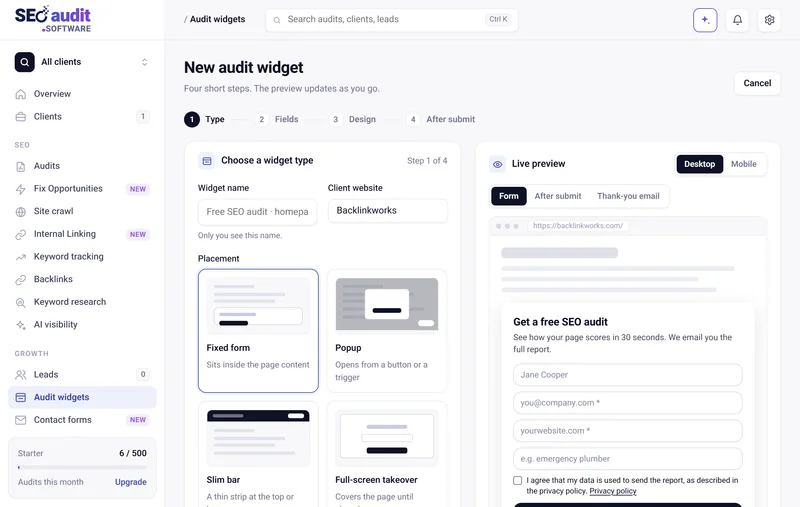
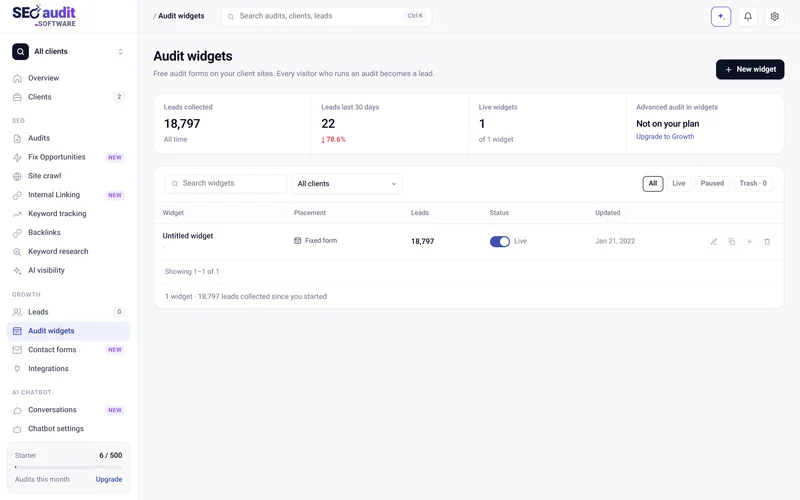
The single highest-converting lead generation asset for agency websites is an embedded audit widget:
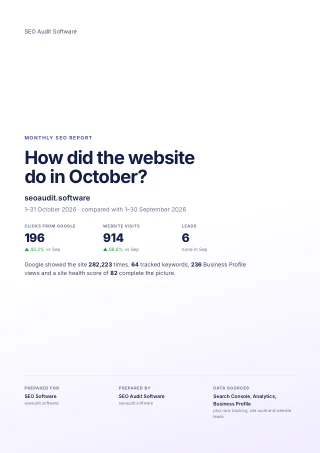
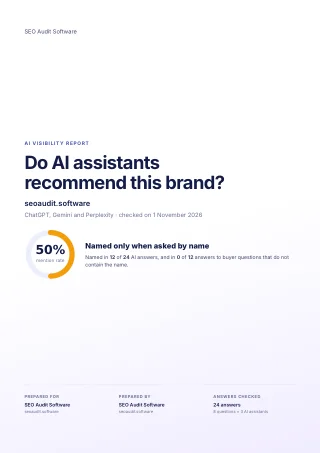
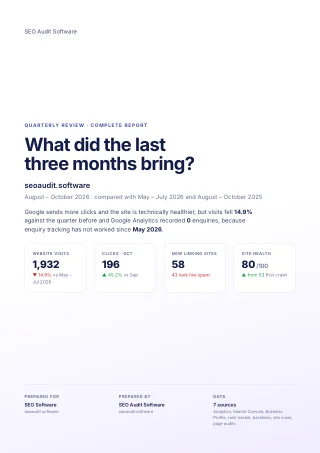
- Immediate Value Exchange: Visitors enter their domain and email, receiving an instant 179-factor diagnostic PDF branded with your agency logo.
- +340% Conversion Lift: Replaces vague "Request a Proposal" forms with an objective, interactive tool.
- Zero Coding: Simply paste a 1-line async JavaScript snippet into WordPress, Webflow, Shopify, or Squarespace.
4. Technique 2: Deploy a 24/7 AI Lead Qualification Chatbot
Modern agency visitors browse outside traditional business hours. A dedicated SEO chatbot provides around-the-clock lead capture:
- Answers prospect inquiries regarding pricing models, audit scopes, and timelines.
- Gently prompts visitors: "Would you like me to scan your website right now for technical indexing errors?"
- Passes collected lead contact information and conversation transcripts directly into your CRM.
5. Technique 3: Publish Technical SEO Pillar Guides with Audit CTAs
Publish exhaustive, field-tested articles targeting high-intent commercial keywords (e.g., "how to fix Core Web Vitals", "canonical tag audit", "ecommerce SEO checklist"):
Place an interactive audit callout box directly within the article: "Don't want to check these 30 technical points manually? Enter your domain below to test your site in 30 seconds."
6. Technique 4: White-Label Technical Audits for Cold Outreach
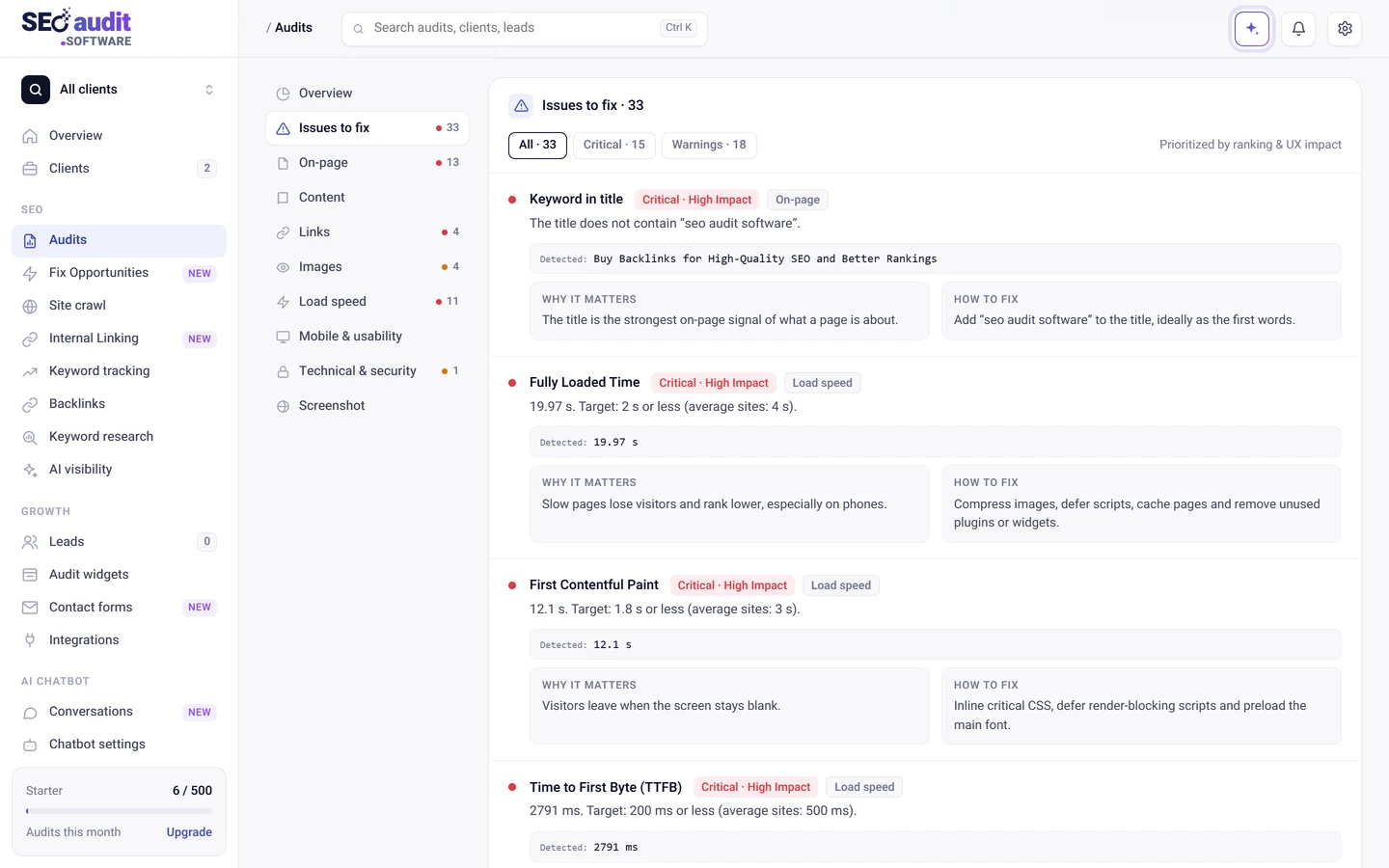
Instead of sending generic cold outreach messages, use SEO Audit Software to generate a 1-click diagnostic PDF report for your target prospect:
Record a 90-second Loom video pointing out 2 critical flaws (e.g. failing mobile LCP or unindexed category pages): "Hey [Name], I audited your site using our agency diagnostics and noticed your category pages are dropping from Google due to 4 broken canonical tags. Here is the full PDF audit report attached."
7. Technique 5: Pair Case Studies with Instant Audits
Whenever you publish a client success story showing a 180% organic traffic gain, pair it with an interactive audit bar:
"We fixed these exact 12 technical crawl errors for Client X to unlock +14,000 monthly organic visits. Want to see if your site suffers from the same issues? Enter your domain below."
8. Frequently Asked Questions
What is the best way for an agency to generate SEO leads?
Embedding a white-label interactive audit widget on your homepage and high-traffic blog posts. It delivers an immediate value exchange that converts at 5.8% compared to 1.4% for traditional forms.
How fast should I follow up on an inbound audit lead?
Within 15 minutes. Prospective clients are actively looking at their audit score on your site; reaching out immediately increases consultation bookings by over 400%.
Can I white label all lead magnets with my own brand?
Yes. Every widget, email notification, and PDF deliverable is completely white labeled with your agency logo, primary palette, and custom domain.